How To Pose for Engagement Photos: 6 Natural Posing Tips

Most couples walk into their engagement session with one worry: "I have no idea how to pose for engagement photos without looking stiff." That concern is completely normal, and honestly, it's one of the most common things we hear at rajfoto before every shoot. The good news? Looking natural on camera is a skill you can learn, and it has far less to do with perfecting angles than you might think.
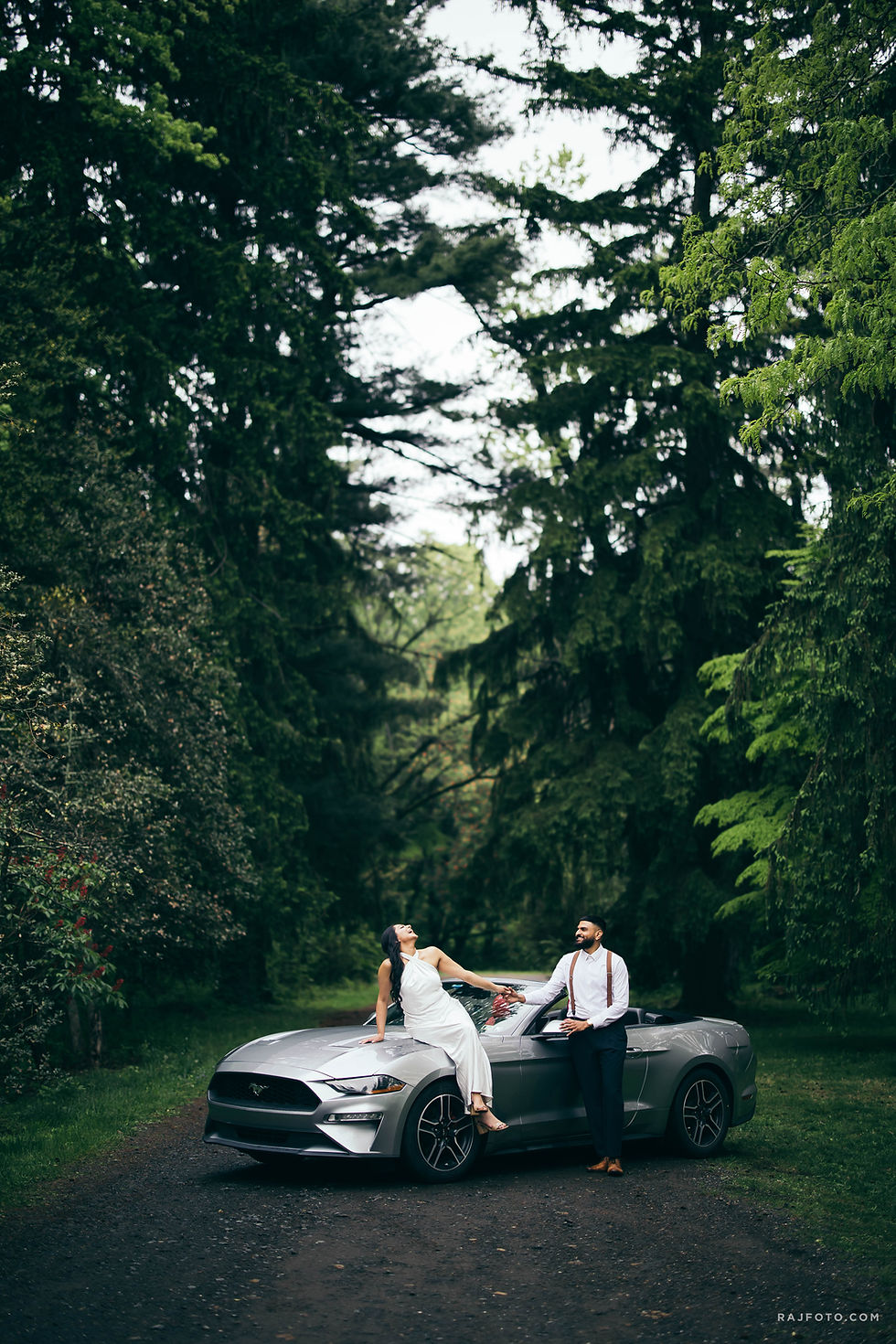
As a studio that's photographed couples across the US, Mexico, India, and the UK, we've seen firsthand that the best engagement photos don't come from rigid poses. They come from real movement, genuine interaction, and a few simple techniques that help you forget the camera is even there. That's the approach we bring to every session, calm, unobtrusive, and focused on capturing what's actually between the two of you.
In this guide, we're sharing six natural posing tips we use with our own couples. Whether you're camera-shy or just want to avoid that awkward "where do I put my hands" moment, these techniques will help you feel relaxed, look like yourselves, and walk away with photos that actually feel worth framing.
1. Warm up with prompts and a reset ritual
Before you think about how to pose for engagement photos, you need to think about how to actually arrive at the session. Most couples show up a little tense, excited, and self-conscious all at once. Starting with a warm-up gives your body and brain a chance to settle before the camera does any real work.
What to do
A prompt is a simple instruction that gets you moving or talking rather than posing. Your photographer might say, "whisper something in their ear," or "walk toward me like you're late for the best thing of your life." These small directives work because they shift your focus away from how you look and onto something you're actually doing. Pair that with a reset ritual, like shaking out your hands, taking one deep breath together, or even just laughing at how weird it feels, and you give yourself a built-in release valve at the start of each new shot.
The goal of a warm-up is not to loosen you up for the camera. It's to make the camera irrelevant to what you're actually doing together.
Why it looks natural on camera
When you respond to a prompt, your expression follows your action instead of being performed for the lens. That gap between "thinking about posing" and "just doing something" is exactly where authentic photos live. The slight smile you get when your partner whispers something slightly embarrassing reads as real because it is.
Small adjustments for different comfort levels
If one of you is more camera-shy, lean into verbal prompts rather than physical ones at first. Asking that person to describe your first date out loud gives them something to think about, and that distraction softens their body language naturally. For couples who are both relaxed, physical prompts like spinning, dipping, or forehead-to-forehead contact work well right from the start.
Mistakes to avoid
The biggest mistake is skipping the warm-up entirely because you feel rushed or self-conscious. Jumping straight into formal poses before you've had a chance to relax almost always produces stiff results. Give yourselves five minutes at the start of the session to just exist together before worrying about getting any "real" shots.
2. Use a walk to get natural movement
A simple walk is one of the most underrated tools for anyone figuring out how to pose for engagement photos. Movement breaks the freeze response that most people experience the moment a camera points at them, and walking is something your body already knows how to do without thinking.
What to do
Ask your photographer to direct you to walk toward them, away from them, or simply alongside each other. You don't need a destination. Stay focused on your partner rather than the lens, and let your arms swing naturally at your sides or hold hands loosely. A slow, easy pace works far better than anything rushed.
Why it looks natural on camera
Your body language shifts completely when you're in motion. Shoulders drop, expressions soften, and the stiffness that comes from standing still disappears entirely. The camera captures you mid-action rather than mid-pose, and that difference shows up in every single frame.
Walking together triggers the same relaxed body language you'd have on any ordinary evening out, and that ease is impossible to fake in a static pose.
Small adjustments for different comfort levels
If physical closeness feels awkward early in the session, start with a side-by-side walk before moving into anything that requires more contact. As you settle in, your photographer can guide you into leaning toward each other or touching more naturally.
Mistakes to avoid
Don't stare at the camera while walking. Look at your partner, look ahead, or share a laugh mid-step. The moment your eyes lock onto the lens, the natural feeling of the shot disappears instantly.
3. Build a flattering base with posture and angles
Good movement only gets you so far. Posture and body angles form the foundation that makes every photo work, and small adjustments here can completely change how you both read on camera. This is one of the least-talked-about parts of knowing how to pose for engagement photos, but it makes an immediate visible difference.
What to do
Stand at a slight angle to the camera rather than facing it straight on. Shift your weight onto your back foot, soften your knees slightly, and lean toward your partner. These three adjustments alone slim your silhouette and create a natural sense of closeness without requiring any forced contact.
Why it looks natural on camera
Straight-on body positioning tends to flatten your shape and make you look rigid. When you angle in, the camera captures depth between you and your partner, which adds warmth and dimension to the entire frame.
A small turn of the body toward your partner reads as intimacy, not a posed trick, because it mirrors exactly what you'd do naturally in any real conversation.
Small adjustments for different comfort levels
If you feel self-conscious about your body, shifting your weight and angling slightly takes the focus away from any part you're worried about. Ask your photographer to shoot from a slightly lower angle to further lengthen your frame and create a more flattering perspective overall.
Mistakes to avoid
Locking your knees is one of the most common reasons couples look stiff in photos. Keep everything slightly soft, and you'll carry a relaxed posture throughout the full session without even thinking about it.
4. Give your hands a job with touch points
Hands are the part of the body that most people forget about when thinking through how to pose for engagement photos. Leave them hanging at your sides with nothing to do and they immediately become the most distracting thing in the frame. Giving your hands a specific job solves this in seconds.
What to do
Touch points are simple, intentional contact moments between you and your partner. Place a hand on their chest, adjust their collar, hold their hand with both of yours, or trace your fingers along their arm. These small gestures don't need to feel significant in the moment, but they read as deeply connected on camera.
Your hands will always look more natural when they're doing something for your partner rather than sitting idle for the camera.
Why it looks natural on camera
Physical contact creates visual anchors in a photo. When your hands are resting against another person, the entire composition feels warm and intentional rather than staged. Your body naturally softens around the touch point, and that response shows up in your face without any extra effort.
Small adjustments for different comfort levels
If one of you feels awkward with a lot of physical contact early on, start with a hand hold rather than anything more intimate. One partner can lace their fingers through the other's, which gives both people something to focus on without requiring close body contact.
Mistakes to avoid
Gripping tightly is the most common mistake. A tense grip reads as nervous on camera. Keep your hands relaxed and soft, and the touch will look effortless.
5. Show the ring without killing the moment
Ring shots are one of the most requested parts of any engagement session, but forcing them too early often produces exactly what you don't want: a stiff, catalog-style photo that feels disconnected from everything else. The key to knowing how to pose for engagement photos is understanding that the ring should appear within the story, not interrupt it.
What to do
Layer the ring into a natural touch point rather than stopping the session to display it. Hold hands, place your hand on your partner's chest, or rest both hands together and let the ring fall into the composition. Your photographer can move in close to capture the detail without you needing to thrust your hand toward the lens.
The best ring shots happen when you forget you're taking a ring shot.
Why it looks natural on camera
When the ring appears as part of genuine contact, the photo tells a complete story rather than just documenting jewelry. Your body stays relaxed, your expression stays real, and the ring reads as a detail within a moment rather than the entire subject of the frame.
Small adjustments for different comfort levels
If you want a more intentional close-up, try having one partner kiss the other's hand while the ring hand rests naturally. This creates real emotion around the shot without requiring you to hold a static pose.
Mistakes to avoid
Pointing your hand directly at the camera with a stiff arm immediately kills the natural feeling. Keep your elbow soft and your hand relaxed so the ring lands in the frame without looking forced.
Quick wrap-up
Knowing how to pose for engagement photos comes down to one core idea: give your body something real to do instead of something to perform. Warm up with prompts, use movement to break the freeze, angle your body toward your partner, and put your hands to work with intentional touch. Layer the ring into a genuine moment rather than stopping everything to display it, and you'll end up with photos that look like the two of you actually showed up.
None of these techniques require acting experience or hours of practice. They just require a photographer who guides you through each moment rather than leaving you to figure it out alone. That's exactly the approach we take at Raj Foto on every session we shoot. If you want to see how this looks in practice, browse our real wedding gallery or reach out to connect with Akash and start planning your session today.


Comments